Dental Implant Failure & Salvage Wall Township
Addressing Problems & Saving Your Restored Smile
Dental implants are known for their long-term reliability; they are successful in more than 95% of cases. Still, no treatment is completely immune to complications. In rare situations, an implant may fail. If you notice that something does not feel right, please do not wait to contact our Wall Township team. With prompt attention, we may be able to provide dental implant salvage treatment and help you continue enjoying the benefits of your restored smile.
Why Do Dental Implants Fail?
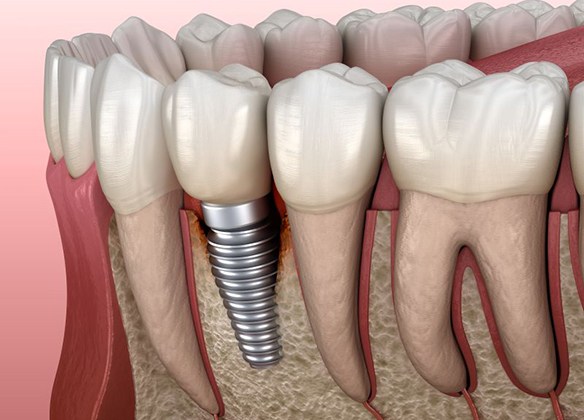
One of the leading causes of dental implant failure is an infection called peri-implantitis. This condition occurs when bacteria attack the tissues that surround and support a dental implant. As the bacteria accumulate around the implant, they can trigger inflammation and gradually damage the gums and bone. Habits and health factors such as inconsistent oral hygiene, tobacco use, and untreated gum disease can increase the risk of peri-implantitis.
Other possible contributors to dental implant failure include:
- A blow to the mouth or another type of dental injury
- Ongoing teeth grinding or jaw clenching that places too much pressure on the implants
- Medical conditions or medications that affect bone health, healing, or osseointegration (the process that allows an implant to bond with the jawbone)
Symptoms of a Failed Dental Implant

Dental implant problems can develop shortly after placement, but they may also occur months or even years later. For that reason, it is important to stay aware of changes in your mouth and schedule an evaluation as soon as you suspect that something is wrong.
Potential warning signs of a failing implant include:
- Persistent or severe discomfort: Once your mouth has healed from implant surgery, the implant itself should not hurt. Lingering or worsening pain deserves professional attention.
- Symptoms of infection: Redness, swelling, tenderness, bleeding, or pus near the implant may indicate peri-implantitis.
- Looseness: If an implant or its restoration feels unstable, the problem should be assessed right away.
- Trouble chewing: Your implants should allow you to eat comfortably. New difficulty biting or chewing may signal a serious problem.
How Dental Implant Salvage Works

If you think one of your implants is failing, the best thing you can do is arrange an appointment with our team. The sooner we examine the area, the more likely it is that the issue can be addressed via conservative means.
During your visit, our team will carefully inspect your implant, gums, bite, and surrounding structures. We may also use diagnostic imaging to better understand what is happening beneath the surface. Once we determine the source and severity of the problem, we will walk you through your recommended treatment options.
In some cases, we can address a problem with antibiotics, a deep dental cleaning, or a replacement restoration. If the implant can no longer be saved, it may need to be removed so the area can heal. After any necessary follow-up care, you may become a candidate for a new implant in the future.