Dental Crowns – Wall Township, NJ
Repair Damaged Teeth and Preserve Your Smile
When a tooth is severely damaged, your only options are to either repair it or remove it altogether. Since missing teeth come with their own slew of oral health problems, our dentist here at Shore Points General and Implant Dentistry always chooses to heal your natural tooth whenever possible. One easy way we can repair damaged teeth and preserve your smile is with dental crowns in Wall Township. If you think your smile and oral health could benefit from one of these beautiful, custom-made restorations, give us a call today!
Why Choose Shore Points General and Implant Dentistry for Dental Crowns?
- Custom-Made Solutions for Each Patient
- Natural-Looking Restorations Designed to Last
- Convenient Hours That Work for Every Schedule
What Are Dental Crowns?
A dental crown is a restorative treatment that’s also sometimes called a “cap.” Crowns fit snugly over a tooth to restore its structure and function as well as its appearance. While crowns in the past could be made of metals like gold or silver, today’s crowns are typically composed of dental porcelain. This material is widely used for its uncanny ability to mimic natural tooth enamel, even down to the way light reflects off its surface. For this reason, onlookers shouldn’t even be able to tell your crown is not your “real” tooth!
Am I a Candidate for a Dental Crown?
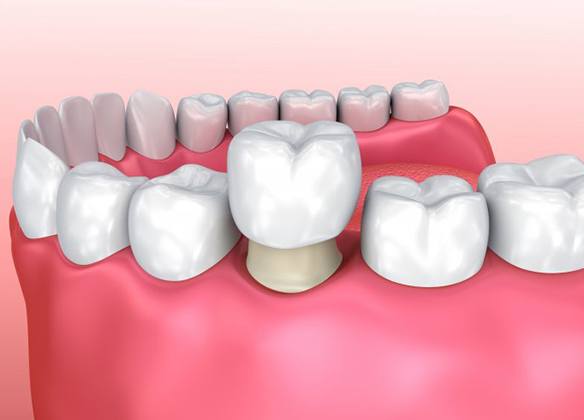
We’ve found that dental crowns can be used to address many problems, such as:
- Covering a single dental implant
- Protecting a tooth that has been treated with root canal therapy
- Repairing a broken tooth
- Restoring a decayed tooth when a filling is not enough
- Protecting an already damaged tooth from further wear and tear
- Improving the appearance of a cosmetically imperfect tooth
The Process of Receiving a Dental Crown
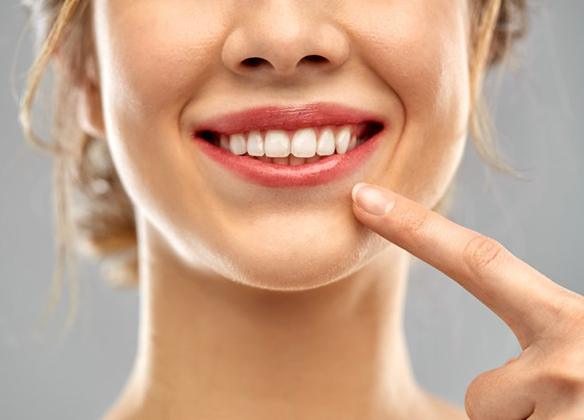
After your initial consultation to determine that a dental crown is right for you, receiving the crown typically takes two appointments. During the first of these visits, we prepare your affected tooth by shaving off a very thin outer layer of enamel. This step ensures that your crown will fit within your smile and not noticeably bulge out. Once the tooth is sufficiently prepped, we take impressions of that area of your mouth and use it to create a mold, which is then sent to our dental lab. From there, skilled ceramists will begin crafting your restoration so that it fits your mouth perfectly. In the meantime, we’ll protect your tooth with a temporary crown. A few weeks later, you’ll return to our office and we’ll replace your temporary with a permanent restoration, vastly improving your smile and oral health!
Benefits of Dental Crowns
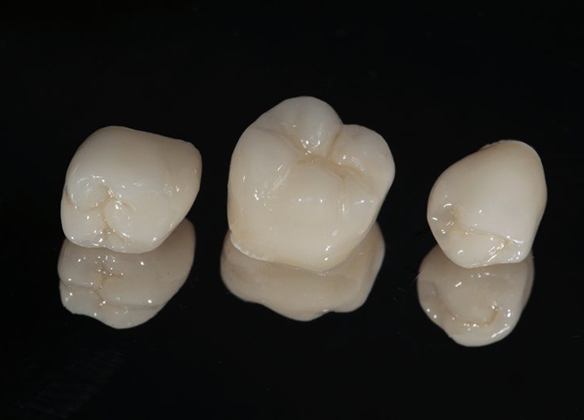
In addition to healing your tooth and preventing the need for an extraction, dental crowns offer a multitude of benefits, including:
- Improved aesthetics. Each dental crown is custom-made to blend in with the rest of your smile.
- Strength. You’ll be able to enjoy chewing all your favorite crunchy foods with ease.
- Longevity. With proper care, your crown can last for years to come.
Understanding the Cost of Dental Crowns

If you require a dental crown to protect a broken or decayed tooth, your first thought might be, “How much will it cost?” The financial obligation required for dental care is always at the forefront of patients’ minds but fortunately, not every case is the same. This means that you will be unlikely to pay the same as someone else. Our team will perform a thorough examination before creating a treatment plan and providing a cost estimate, allowing you to not only better prepare for the cost of the dental crown but also to avoid any surprises along the way.
Factors That Affect the Cost of Dental Crowns
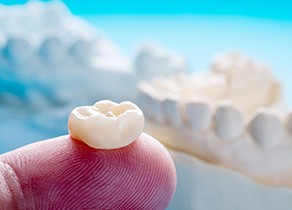
Your meeting with a dentist will require a thorough examination that involves paying special attention to what you need, the severity of your situation, and how your new crown will be created. If the damage or infection requires a root canal or dental implants, we will need to complete these before adding a dental crown to your smile.
Another factor that is considered as part of the cost is the materials used to create our crown. At Shore Points General and Implant Dentistry, we use porcelain to create a more natural appearance, but crowns can also be crafted out of gold, amalgam, and other materials.
The last factor to consider is how your crown will be created. Some dentists have CEREC technology and can create restorations in-house; however, most cases require that crowns be created by skilled lab technicians offsite.
Does Dental Insurance Cover Dental Crowns?

You’ll discover there is good news when it comes to dental insurance and coverage for these kinds of restorations. As a restorative service that is necessary to improve a person’s oral health, dental crowns are commonly covered at 50-80% by dental insurance companies. It’s important to review your plan first before agreeing to move forward, as no plans are the same. However, our team will be happy to help ensure that you get the most out of your benefits so that you pay less on the day of your visit.
Other Options for Making Dental Crowns Affordable

At Shore Points General and Implant Dentistry, our team is pleased to offer alternative solutions if you need help paying for your dental crown and have no private dental insurance. Flexible financing is available through CareCredit, which allows you to avoid surprise fees, enroll in a low or no-interest payment plan, and better budget your treatment so that you don’t have to pay the entire amount upfront.
Dental Crown FAQs
Are Dental Crowns Permanent?
Since dental crowns have to be replaced eventually, they’re not considered a permanent solution. However, you can expect your crowned tooth to last anywhere from five to 15 years depending on how well you take care of it. Keep in mind that the procedure for getting a dental crown is irreversible. Once Dr. Aptaker removes the enamel, your tooth will always need a crown for protection moving forward. Luckily, you can help your newly restored smile last as long as possible by practicing proper dental care and staying on top of routine checkups.
How Do You Know When a Dental Crown Needs Replacement?
The only way to know for sure whether or not your dental crown needs replacement is by having it physically examined by Dr. Aptaker. Of course, there are also a few warning signs you can look out for that indicate your restoration is approaching the end of its lifespan. Some of those include:
- Noticeable pain
- Instability, especially when chewing something sticky
- Discolored or worsened appearance
- Dark line that has formed at the crown’s base
Can Dental Crowns Get Cavities?
While it’s impossible for a dental crown itself to develop cavities, the tooth underneath is still vulnerable to decay. Poor oral hygiene can cause bacteria and plaque to form around the gumline where the tooth meets the crown, wreaking havoc on the underlying tooth. The good news is that you can lower the risk of cavities by practicing good oral hygiene, visiting your dentist regularly, and avoiding poor dental habits.
What Happens If You Wait Too Long to Get a Dental Crown?
Dentists will only recommend a dental crown if it’s truly the best option for your oral health. That said, you should not put off the procedure as it can result in further damage and infection. Also, waiting too long may cause your tooth to become so compromised that it needs a root canal or even an extraction. If you want to preserve as much of your natural tooth as possible, you should try and get your dental crown immediately after your dentist recommends it.
How long do dental crowns last?
On average, you can expect your dental crowns in Wall Township to last anywhere from five to 15 years, but this can vary depending on which material your crown is made of.
Metal crowns usually last a bit longer than metal-free ones, but this isn’t always the case. Furthermore, the difference is usually negligible.
More so than the material your dental crown is made of, its longevity depends on a variety of individual factors like your diet, or oral hygiene, and whether you have any bad oral habits like smoking, nail biting, teeth grinding, or crunching on hard things like ice or hard candies.
Crowns on your front teeth may also last a bit longer than those on back molars, since they aren’t subject to as much wear and tear from chewing as back teeth are.
Does it hurt to get a dental crown?
As with any type of dental filling, your dentist in Wall Township will completely numb your tooth before beginning any work on it when getting a dental crown. In most cases, you’ll only need a topical anesthetic.
While your tooth will be numb for the preparation stage, it may not even need to be for the final crown placement. If you would prefer it is, please let your dentist know.
Once the crown has been placed, your tooth may feel sensitive for the next few days, especially if you’ve had a root canal. You can alleviate this discomfort with over the counter or prescription pain relievers, but please call us if your pain worsens instead of improving within about two to three days.
It is also important to remember that because your crown will protect your tooth from further damage, it could very well prevent pain in that tooth later on.
Are dental crowns safe?
When placed by an experienced dentist in Wall Township, your dental crown should be completely safe. That’s because unlike with metal fillings, your dental crown does not contain mercury, so there’s no need to worry about toxicity. Better still, tooth-colored crown materials such as ceramic and zirconia contain zero toxins.
If you are sensitive to metals or have metal allergies, be sure to let your dentist know.
In some rare cases, you may experience an adverse reaction to dental porcelain, but this is extremely unlikely.
Call us right away if you experience any gum irritation, redness, or swelling near your dental crown, as this may indicate an allergic reaction.
Do dental crowns feel natural?
Within a few days of receiving your dental crown in Wall Township, it should begin to feel increasingly natural.
Because dental crowns are made from durable, lifelike materials that can withstand the rigors of everyday chewing as easily as natural enamel, eating with your restoration shouldn’t feel strange. In fact, the reason your tooth was reshaped prior to your crown’s placement was to ensure it would fit comfortably within your arches.
Additionally, each crown is custom-made based on impressions of your tooth, so it should not look or feel noticeable.
If you run your tongue over the arch of your teeth, you may notice the crown feels slightly different to the touch than your other teeth, but for the most part it should look and feel so natural that you may forget which tooth has been repaired!