Dental crowns are durable, long-lasting restorations designed to repair teeth that have excessive decay or damage. But although they could potentially last for ten or more years with proper care, they still won’t last forever. Here’s a closer look at four important warning signs that your dental crown may be nearing the end of its lifespan, and what you should do if you notice them.
What Are Dental Crowns?
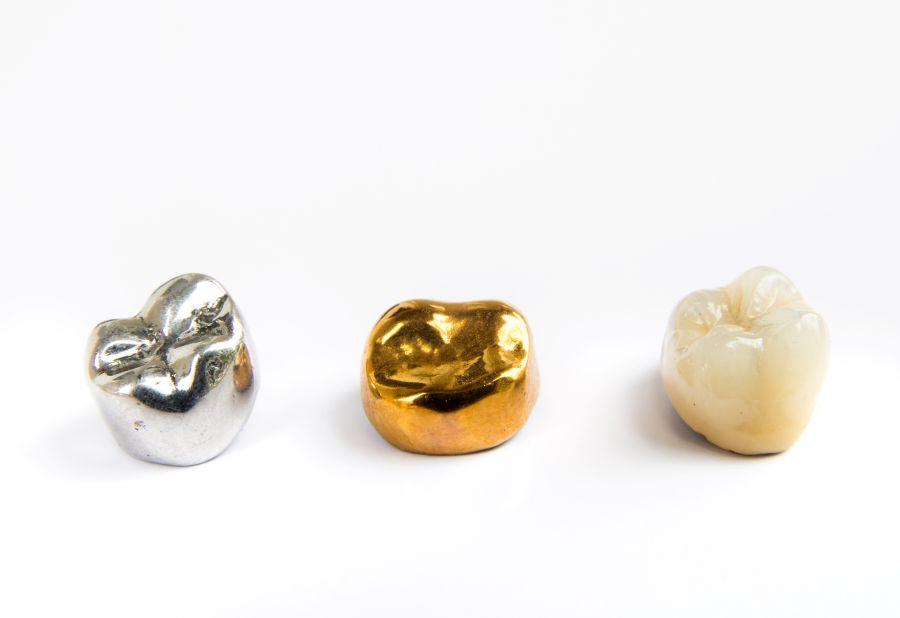
Think of a dental crown as a deluxe filling, only instead of your dentist removing a small portion of damaged enamel and filling it in with a tooth-colored composite resin putty, they reshape the tooth and protect it with a restoration that fits over it like a cap. It is then cemented into place, so it both looks and feels just like a real tooth.
Dental crowns can be used to repair a variety of tooth damage including cavities, infection, cracks, and large chips. They’re even easy to care for; simply brush and floss around them as you would your natural teeth.
How Can I Tell if I Need to Replace My Dental Crown?
Although the exact lifespan of a dental crown will vary from patient to patient, here are four important indicators that it could be time to replace yours.
Swelling or Discomfort
Once it is cemented in place by your dentist, you should not notice your dental crown in your smile. It shouldn’t be painful, cause sensitivity, or look or feel different from your regular teeth. However, if you notice discomfort when you chew or sensitivity surrounding the tooth, this could mean you have a cavity or infection forming underneath the crown and should see your dentist as soon as possible.
Gum Recession
Receding gums is common in patients with periodontal disease and occurs when the tissue begins pulling away from the teeth. If this happens around a dental crown, you may notice the line where the restoration meets the gums is visible. This is an important indicator that it’s time to have your crown (and your periodontal tissue) checked by your dentist before it has a chance of getting worse.
Wear and Tear or Damage
Despite being strong and durable, it is possible for dental crowns to wear down or break with repeated use. If yours becomes worn or damaged, it cannot do its job to properly protect your tooth. Thus, it is important that you visit your dentist as soon as possible to have it replaced. This will not only make it easier for you to enjoy a full diet, but it will also ensure that the underlying tooth remains strong and healthy while you do.
Age
Although crowns were designed to last for 10 or more years, it is not unheard of for them to wear down faster depending on a variety of individual factors like your diet and lifestyle. In most cases, if you’ve had it for more than a decade, it’s a good idea to replace your restoration before it ever has a chance to become a dental emergency.
Remember, dental crowns are a durable, lifelike way to restore teeth with severe damage. But despite their reputation for longevity, they will still need to be replaced eventually. Thus, be on the lookout for these four factors that could indicate it’s time for an upgrade so you can continue to experience the same consistent protection your restoration has provided from day one.
About Dr. Aptaker
Dr. Jason Aptaker earned his undergraduate degree at Rutgers University and his master’s degree and Doctor of Dental Medicine at the University of Medicine and Dentistry of New Jersey (now Rutgers University Dental School). He has also completed the postgraduate Dental Implant Continuum at Columbia University and is a Fellow of the International Congress of Oral Implantology. To schedule an appointment at Shore Points General and Implant Dentistry, visit our website or call 732-223-9199.